OLift Equipment Request a Quote

OLift Equipment

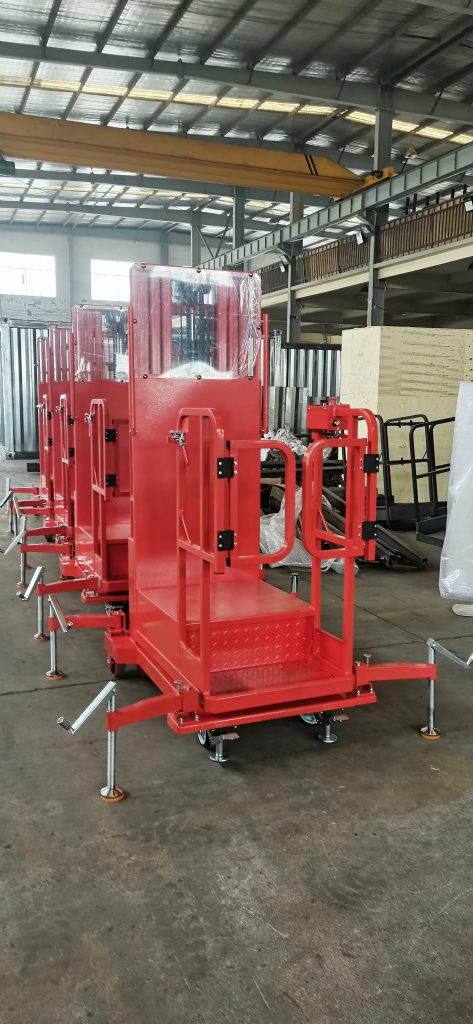
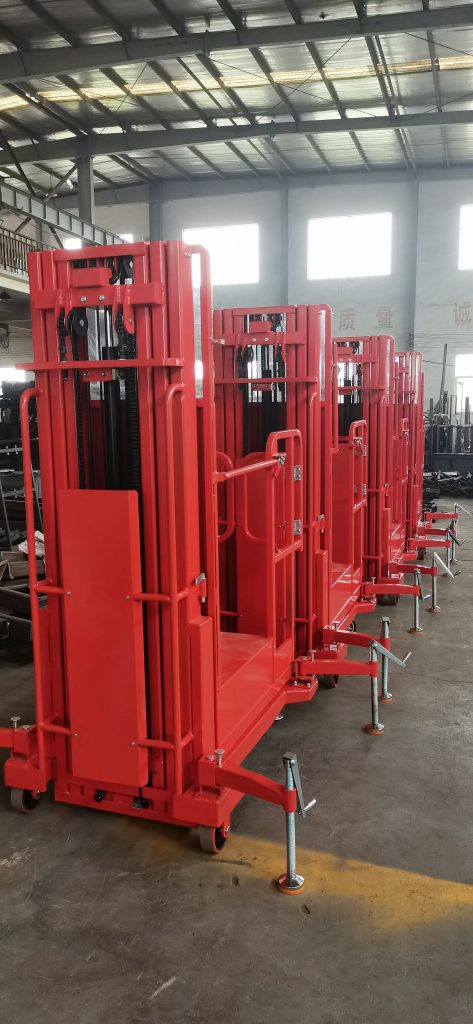
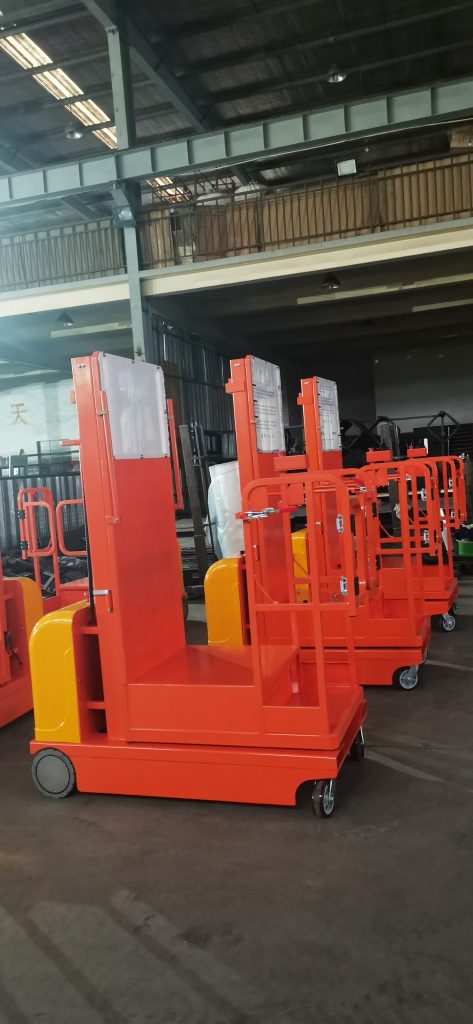
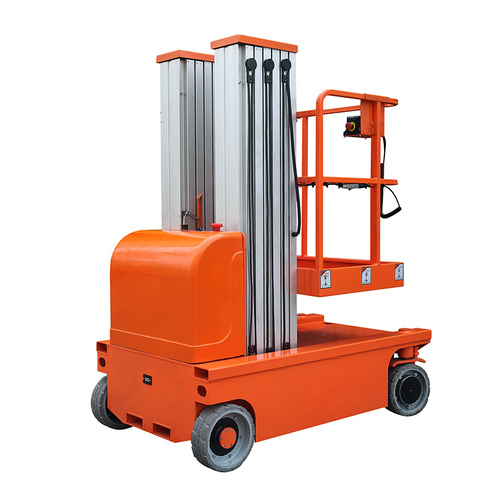
Wide application of order picker

Order picker are widely used in factories, industries, properties, buildings, warehouses, airports, gas stations and other places. Especially It is a good helper for farmers, for example, it can used on the cherries, grapes etc fruits as well as the vegetables’ s picking.

In terms of power supply, it has two main types: Full electric type and Semi electric type.

Main specifications:

Platform load capacity: 300kg

Max. Platform height from 2700mm to 4500mm.

  1. Walking and lifting all by electric.
    The electric order picker can carry 300 kg and lift 2700 to 4500mm.
  2. Spacious operating platform.
    The order picker has a wide operating platform and a high-quality non-slip surface, which embodies good stability and ensures safe operation at high altitude.

Suitable for single person operation.
It is mainly used for picking and placing items in narrow spaces such as warehouses, workshops, elevators, supermarkets, and subway stations.

A Brief History of Lifting Platforms

Do you know? In fact, the demand for vertical transportation of the lifting platform is as long as the human civilization. The earliest lifting platform used manpower, animal power and hydraulic power to lift weight. The lifting device has been relying on these basic power methods until the industrial revolution.

In ancient Greece, Archimedes developed an improved lifting device operated with ropes and pulleys. It used winches and levers to wrap the lifting rope around the bobbin.

In 80 AD, gladiators and wild animals reached the height of the arena in the Roman Coliseum on the original lifting platform.

Medieval records include countless people who lifted the lifting device and patterns for supplying isolated locations. The most famous of these is the lifting platform of the Monastery of St. Baram in Greece. The monastery is located on the top of a mountain about 61 meters above the ground. The hoist uses baskets or cargo nets to transport people and goods up and down.

In 1203, the lifting platform of a monastery located on the French coast was installed using a huge tread wheel. The donkey provided the lifting power. By winding the rope on a huge column, the weight was lifted.

In the 18th century, mechanical force began to be used for the development of lifting platforms. In 1743, French Louis XV authorized the installation of a lifting platform for the use of counterweights in a private palace in Versailles.

In 1833, a system using a reciprocating rod lifted miners in the Harz Mountains region of Germany.

In 1835, a belt-driven lifting platform called a “winch” was installed at a factory in the United Kingdom.

In 1846, the first industrial hydraulic lifting platform appeared. Then other powered lifting devices followed quickly.

In 1854, the American mechanic Otis invented a ratchet mechanism and displayed a safe lifting platform at the New York Trade Fair.

In 1889, when the Eiffel Tower was built, a steam-powered lifting platform was installed, and then the elevator was used.

In 1892, the lifting equipment of Chile ’s Astillero was built. Until now, 15 lifting platforms still use the mechanical equipment more than 110 years ago.

Currently, the “Gotthard Tunnel” under construction in the Canton of Graubünden, Switzerland, is an underground railway tunnel from the Alps ski resort to other European countries. It is 57 kilometers in length and was opened to traffic in 2016. At the “Alps” high-speed train station about 800 meters above the ground, a lifting platform will be built directly to the ground. When completed, it will be the longest lifting platform in the world. After reaching the ground through the lifting platform, passengers can take the Alpine Glacier Sightseeing Express Train and reach the mountain resort in two hours.

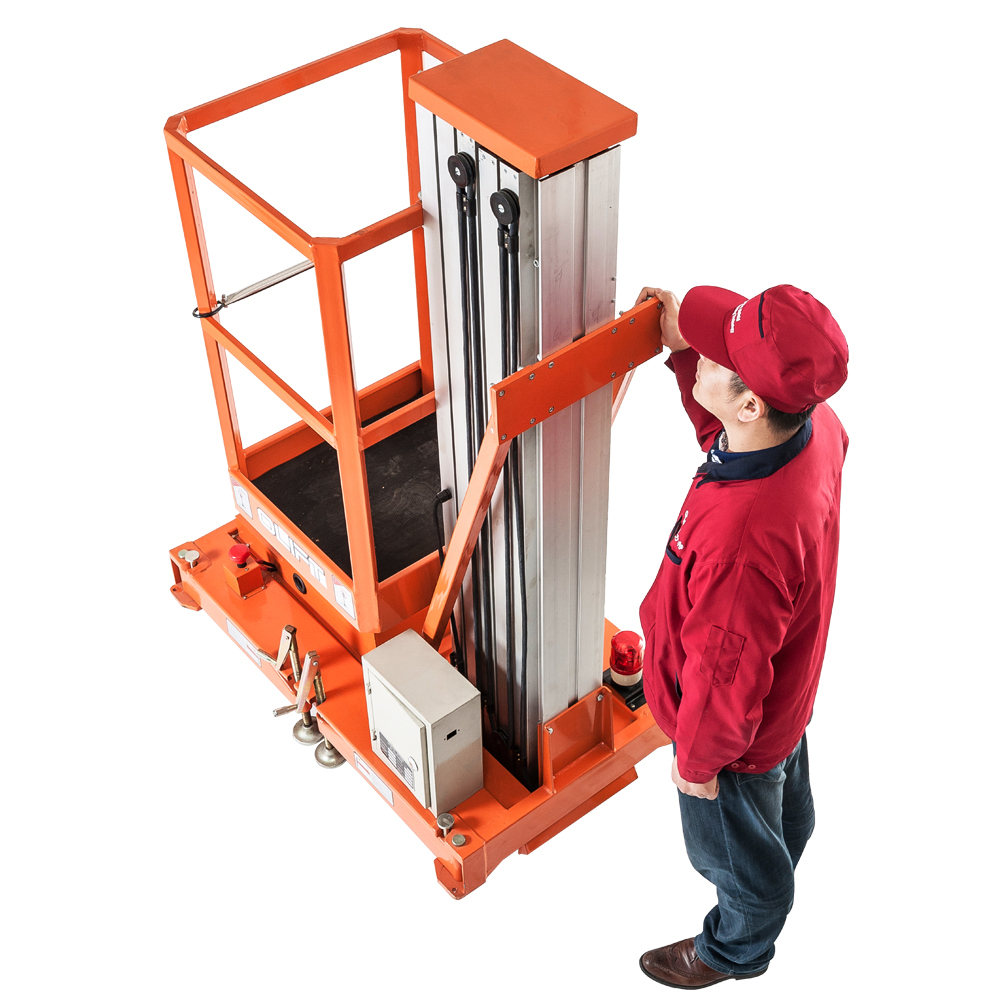
Full electric double mast aluminum alloy lifting platform—PLA
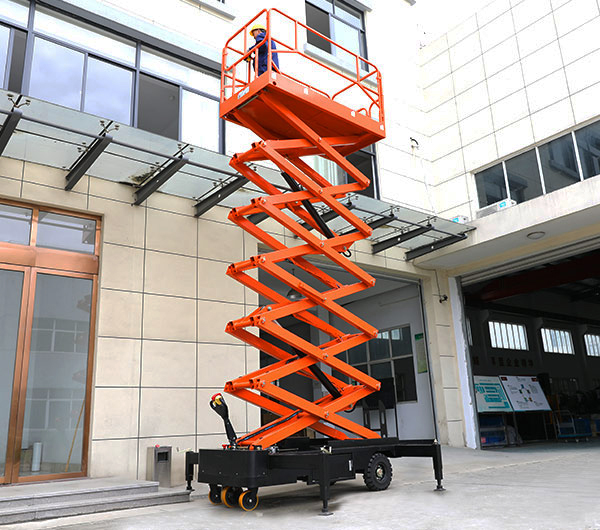
Scissor lifting platform with pulling device

Development history of global industrial vehicle technology

Since the last century, developed countries have begun to use the first logistics vans for cargo handling. Since then, it has created a new era of the world’s material handling industry. It is the originator of modern industrial vehicles.

In 1924, the technical staff of Clark Company invented a forklift that truly has the function of being handled by a fork, that is, “Forklift”-that is, “a forklift has fork to lifting” machinery. The so-called forklifts they manufactured at that time had a relatively different shape from the current forklifts. The forklifts at that time were counter-balance diesel forklifts with rough and ugly shapes. But compared with the current forklift, the forklift also has basic elements such as power, counterweight (that is, balance weight), fork, and lifting cylinder (single cylinder). After the First World War, the forklift trucks invented by Clark Company began to serve all important material handling markets around the world on a large scale. There is no doubt that the forklift first serves military logistics.

Below we briefly describe the development process of global industrial vehicle technology, including many revolutionary events:

In 1917, the American Clark company developed a material handling truck, named Tructractor, is the pioneer of diesel forklift.

In 1924, Clark designed a standard forklift, named Duat, which was first used in the US military.

In 1925, the United States Yale (Yale) launched the first commercial battery-powered forklift.

In 1943, the German Steinbock company produced the first electric three-point forklift in Europe.

In 1947, the Swedish BT company manufactured the first manual pallet forklift.

In 1951, the German Steinbock company produced the first off-road forklift.

In 1953, the “AGV”, a transportation tool invented by individuals for unmanned operation, was launched.

In 1957, Linde (Germany) produced the first static pressure driven forklift.

In 1958, the Swedish Atlet company was established, producing electric stacker for the first time.

In 1963, Germany’s Steinbock built the world’s fastest forklift. (50km / h).

In 1969, Moffet produced the first truck-mounted forklift.

In 1973, the British company Pyroban applied the explosion-proof technology to the forklift for the first time.

In 1981, Merlo of Italy and Manitou of France launched the first telescopic forklift at the same time.

In 1985, Kalmar produced the first container crane.

In 1996, the American Airtrax Company applied the universal wheel technology obtained from Sweden to the forklift truck, launched the “universal walking forklift” and “universal lifting platform”, and served the US military aircraft carrier.

In 1998, the German Stocklin forklift company produced the first AC electric forklift, and Germany Baumann manufactured the world’s largest electric side forklift (30 tons).
In 2006, the United States Intermec and Cascade (Cascade) jointly developed a conceptual RFID forklift (RFID is the abbreviation of Radio Frequency Identification, that is, radio frequency identification, commonly known as electronic tags).

In 2008, Still and Toyota launched hybrid forklifts. Toyota and Linde launched hydrogen-powered forklifts. Jungheinrich launches a methanol fuel cell forklift.